_ed.png)


The Brutalist: A sweeping tale of exile
- Jan 9
- 6 min read
10 Oscar nominations. A major cinematic event. But also a long, dense, and at times gruelling work. SARA MIGUEL reviews a dark, visionary, and sometimes frustrating epic that explores exile, artistic creation, and America as a promised land.

With his third feature film as a director, Brady Corbet has spent over seven years crafting this gargantuan fresco, which he likely considers the film of his life. The story spans nearly thirty years and follows Jewish Hungarian architect László Tóth, a concentration camp survivor. Alongside his wife Erzsébet, he flees post-war Europe and settles in the United States, hoping to rebuild his life, his marriage, and unleash his architectural genius.
Loosely inspired by Jewish architects of the time, such as Marcel Breuer and Erno Goldfinger, this fictional character navigates the grand illusions and bitter disillusions of the “American Dream.” Left to his own devices in a foreign land, László settles in Pennsylvania, where the eminent and wealthy industrialist Harrison Lee Van Buren recognizes his talent as a builder. But power and legacy come at a heavy cost. I saw it as an imaginary biopic, a painful homage to those European creators, bearers of genius, who were ultimately crushed by the forces of power, money, and a society that forgives neither exile nor weakness and grief.
Taking its time: an audacious format

The film’s formal audacity must be acknowledged. With its three hours and 35 minutes runtime, shot in VistaVision on 35mm film, a visible intermission on screen, and a fragmented narrative, The Brutalist evokes a time when cinema dared to take its time.
The film’s structure, in several acts with an onscreen intermission, evokes theatre or classic Italian cinema more than contemporary Hollywood storytelling. Still, this intermission, complete with a countdown that appears after one hour and 40 minutes, though unusual, is a fully conscious choice by the director. In an age where audiences are used to long films, this pause allows a moment of respite and introduces the film’s second half. That said, I believe the film could have done without it, as the narrative naturally marks a transition between the two halves.
A story in acts
The film is clearly structured into parts - prologue, first act, intermission, second act, epilogue – a structure more reminiscent of theatre than classic cinema. I was attracted by this unique approach, this uncompromising auteur vision that is so rare today. This is a film for audiences willing to be absorbed by a complex, sometimes disorienting work. You can feel Brady Corbet poured seven years of his life into it. He probably believes he’s made the film of his life, and with its 10 Oscar nominations, he might well be right.
A masterful first act, a more uneven second half
The film opens with a sequence shot that is both disorienting and masterful, setting the tone. Handheld camera, diffuse sounds, traumatic voice-over - the viewer is plunged into a disturbing sensory flow. This is a cinema that demands - and rewards. This intense opening, emerging from an almost unreadable chaos as one man pulls himself out, is a journey towards the light, punctuated by a voice narrating the horrors of a ravaged Europe. A cramped, unstable frame, a confusing location, dark photography, until suddenly, the Statue of Liberty appears, upside down. The frame itself struggles to make sense of the scene, and just as the hero boards a bus, the credits roll, from right to left, like a microfilm scroll. The direction is simply breathtaking.
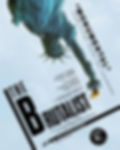
From the outset, Corbet’s style asserts itself across many dimensions, and the result is a striking direction. The first half of the film, focused on László’s arrival in the U.S. and his encounter with patron Harrison Lee Van Buren, stands out with its rhythmic, hushed dialogue and growing dramatic tension. Adrien Brody, in the lead role, gives a restrained performance, haunted by the silent pain of a survivor.
The second half, however, gradually loses steam after such a grand opening. With the delayed appearance of his wife Erzsébet (brilliantly played by Felicity Jones) and niece Zsófia, the second half begins well, but quickly gets bogged down with financial struggles around the construction project, Harrison hires a rival architect to cut costs, and a tragic accident halts construction. This late introduction of more melodramatic elements - financial conflict, professional rivalry, sexual assault - undermines the coherence of the story. This second act clearly collapses what the first had painstakingly built. Adrien Brody’s character becomes increasingly unbearable, addicted, egocentric. He shifts from admirable victim to tragic, almost oppressive figure, broken by rejection, addiction, and solitude. The director seems to pile on his traumas to drive the nail deeper into this once silent, talented hero.
At the same time, Corbet explores the passionate, turbulent relationship between László and Erzsébet, their lingering trauma from the concentration camps, and their internal family debate about possible Aliyah (emigration to Israel). One might wonder if Corbet should have trimmed the film to two hours 30 minutes, without an intermission, cutting certain topics and perhaps removing the epilogue, whose interesting details about the monument’s structure could have been incorporated earlier.
Brutalism, a background aesthetic
While the title clearly refers to the 1950s-70s architectural movement - characterized by massive volumes, raw concrete, and lack of ornamentation - the film only explores this style in passing. A few scenes highlight László Tóth’s constructions, emphasizing the contrast between the austerity of his work and the gentleness of his character. But The Brutalist primarily uses architecture as a metaphor, for a man shaped by the violence of history, facing an America that both welcomes and rejects him.

A film about memory and displacement
Through its deliberate slowness, Corbet explores the weight of history. Scattered flashbacks, heavy silences, memories of the camps - all of this infuses the film with deep melancholy. Architecture becomes a vessel of memory. The relationship between László and Erzsébet is both moving and painful.
A masterpiece of direction and cinematography
Despite its length, The Brutalist is a masterpiece of cinematography and scenography. The most striking images are those of matter - ever-present mud, the harsh grey of concrete, the sublime shots of the Carrara quarry.. The long tracking shots along roads also contribute to a sublime visual language. The direction draws from many influences. The use of voice-over (Erzsébet’s letters) is particularly emotional.

The sound design is unsettling yet effective; omnipresent music, background noise, offset dialogue. Daniel Blumberg’s repetitive, yet haunting, score is built around four recurring notes that shift with the hero’s emotions. This composition reinforces the heavy, almost hypnotic atmosphere. The loose, arrhythmic narrative also handles memory gaps and ellipses very well. It seems the film is trying to reproduce the ruptures of history within its very fabric. The layering of voices (notably from Erzsébet’s letters), background noise (radio broadcasts, desynchronized dialogue), and the many ellipses (the camps, arrival in America, fatherhood) give the film a deeply literary texture. The sets are also impressive, notably the vast Italian marble quarry or the massive brutalist buildings. These spaces visually express what László cannot say - his relationship with the world, suffering, and silence. It lends the film a rare physical density.
An exceptional cast
Adrien Brody and Felicity Jones are remarkable in their emotional performances, and Guy Pearce looks like he’s stepped out of a 1930s film. Adrien Brody, portraying László, delivers one of his finest performances. With his tall frame, drawn features, and heavy accent, he’s entirely convincing as a Holocaust survivor. Felicity Jones plays his sister Erzsébet with real emotional weight, though her narrative arc remains peripheral. Guy Pearce appears as patron Lee Van Buren, and Stacy Martin takes on the role of Maggie Lee, continuing her collaboration with Corbet across all three of his films.

Overall, an ambitious, sometimes uneven, but necessary film
With The Brutalist, Brady Corbet delivers what is probably his most personal and audacious work. While some viewers might disengage due to its length, slow pace, or the harshness of certain scenes, others will find in it a powerful fresco about exile, memory, and the impossibility of reinvention.
Yes, the film might have benefitted from being tighter. Yes, some themes are either brushed over or made too explicit. But The Brutalist is one of those films that leaves a lasting mark, thanks to its scope, its singularity, and its monumental melancholy. I expected to be swept away more fully. And yet, I can’t deny it’s a true masterpiece. I wanted to love it, but the narrative sometimes dragged too much to keep me fully engaged, especially due to some weaknesses in the second half of the script.
Despite its length, I still recommend seeing this film for the intensity, and at times, the beauty, of the life journey it portrays.
So yes, The Brutalist is imperfect. But it is a film that dares, that questions, and that disturbs. It makes you want to keep believing in demanding auteur cinema.
A film that leaves its mark.

Written by SARA MIGUEL (former BA Journalism student, University of Chester, UK)