_ed.png)


My part in Brontë manuscript return
- Feb 18
- 3 min read
University of Chester's PROFESSOR DEBORAH WYNNE celebrates the return of a Charlotte Brontë manuscript to its natural home and explains her role in a unique research project

Recently, I was asked to undertake a unique research project.
I was selected, along with six other Brontë scholars, to study a newly-found manuscript written by the fourteen-year-old Charlotte Brontë which was lost for over a century. This miniature magazine, written in Charlotte’s tiny script, was the missing part of a series called ‘The Young Men’s Magazine’ that she edited and wrote. The Brontë Parsonage Museum, once the Yorkshire home of the famous sisters, held the other issues of the magazine in its archive, but no one knew what the missing little magazine contained. The discovery and purchase of this manuscript is part of a fascinating story which, despite many setbacks, has a happy ending.
Hidden manuscript
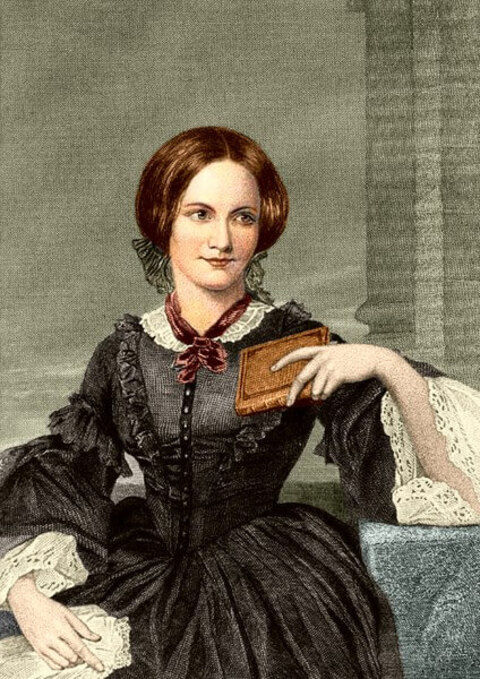
To scholars’ frustration, the magazine was for more than a century hidden away in the hands of a private collector until 2011, when it became available to buy at auction. The Brontë Parsonage Museum, despite National Lottery funding and generous donations from wealthy patrons, was outbid by a French company. Once again, the precious manuscript was hidden from public view. It was only when the company was investigated for financial irregularities and was forced to sell its assets that the little magazine again appeared again in a Parisian auction house.
Fundraising campaign celebration
In 2019, the Brontë Parsonage Museum set up a fundraising campaign, and like most other members of the Brontë Society, I made a modest donation, little realising that I would eventually be one of the first people to be privileged to read the manuscript. After a tense wait during the auction proceedings, where another determined bidder kept Brontë fans on the edge of their seats, the jubilant cheers from the staff and volunteers in the Brontë Parsonage Museum told everyone that the little magazine was at last returning to its home, the Yorkshire moorland home where Charlotte wrote it. The manuscript was immediately issued with its own special passport (including an identifying photograph) and carefully transported to its new home at the Museum in 2019.
Secret research
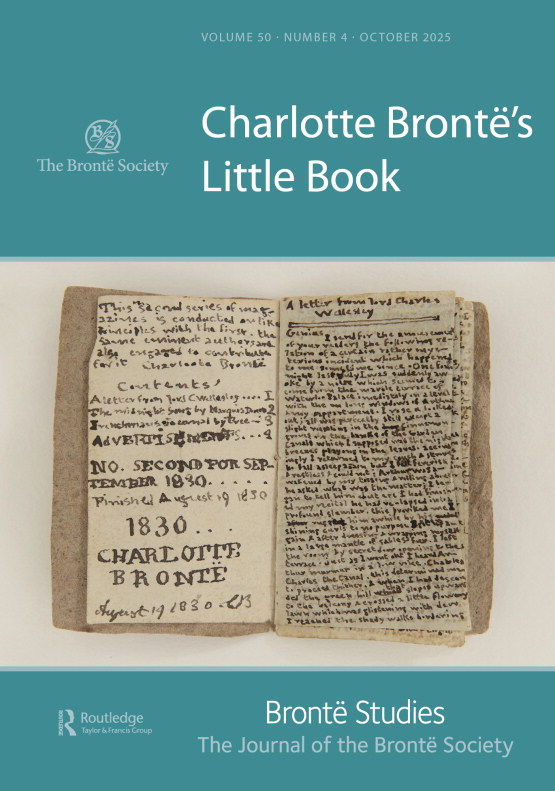
Once the Museum’s curatorial team had carefully examined it to discover how best to preserve and display this precious acquisition, I was delighted to be approached by Dr Claire O’Callaghan, editor of Brontë Studies, where I was told that the manuscript would be first published, alongside academic essays analysing each feature. I was told that my research must be done in secret because the little magazine’s contents should not be disclosed before its first publication and its official unveiling at the Museum. My job was to study and comment on one feature in the magazine, ‘The Journal of a Frenchman’.
Deborah's publication
I felt incredibly privileged to be part of this project and seeing the manuscript. Realising that I was one of the first people to read it was exciting. In addition, I’d been allocated a lovely piece to analyse, where the teenage Charlotte writes from the standpoint of a clothes-conscious, pleasure-loving young French aristocrat, who becomes drunk and disorderly on his first visit to Paris. I spent months fitting this extract into the larger story of the Frenchman, for his journal was serialised in the other issues of Charlotte’s magazine. My article, ‘The Dandy in the Pink Waistcoat: Charlotte Brontë’s “Journal of a Frenchman”’, can be read in the October 2025 issue of Brontë Studies, which prints the magazine’s contents alongside the commentaries provided by the scholars.
Miniature magazine, memorable moment

It is wonderful that this fascinating manuscript is no longer seen as a company’s asset languishing in a bank vault, but is now where it belongs, in the Brontë Parsonage Museum, accessible to visitors and researchers from around the world.

Written by DEBORAH WYNNE, Professor of English Literature, University of Chester, UK


I found the article really interesting because it introduces Cash Converters in Dubai as a place where people can buy and sell second-hand items, which helps make used goods more accessible and affordable in the local market. It shows how the business model focuses on recycling value through everyday products like electronics and furniture. It made me think of a time I tried selling old items online and realized how useful such systems can be. During exams I once searched take my exam online for me because I felt overwhelmed. It really shows how convenience and support systems shape how people manage stress and daily needs.